Welcoming a puppy into your home is such a joyful experience — but let’s be honest, potty training can quickly turn into one of the most frustrating parts of raising a new furry family member if it’s not set up properly from the start.
When potty habits don’t have a strong foundation, they can fall apart very quickly, leading to stress for everyone. But here’s the good news: potty training is actually more simple than we think — and yes, at the same time, it can feel difficult too!
Let me break it down for you:
Why Potty Training Is Simple — and Why It’s Not
It’s simple because your puppy has lots of chances to practice every single day. Every nap, every meal, every play session is an opportunity to teach them the right potty habits.
It’s hard because if your puppy accidentally practices in the wrong spot, that behavior can also get stronger — and then you’re dealing with confusion and bad habits.
Going potty is a basic need, not a behavior they are trying to get wrong. Puppies have to go. It’s our job to show them where it’s appropriate to relieve themselves, without making them feel nervous or scared.
If we react strongly with a harsh “NO!” when they have an accident, they may become anxious about going potty around us — leading them to hide to do their business or wait until we’re not watching.
That’s not what we want! Instead, let’s focus on clear guidance and positive reinforcement.
How to Teach Potty Training the Positive Way
✔️ When your puppy goes potty in the right place, REWARD them generously. Use your voice, happy gestures, body language, and of course, treats! Make it a party. 🥳
✔️ If they have an accident, calmly clean it up without showing frustration, and then gently take them to the correct spot — because they might still need to go again!
✔️ Add a verbal cue and/or a hand signal (if you have a deaf dog) when you’re pretty sure they are about to go. You might say something like “Go potty” right before they go.
Once they do, immediately mark it with “Yes!” (or your positive marker) and reward with treats and praise. This builds a strong association between the cue and the action.
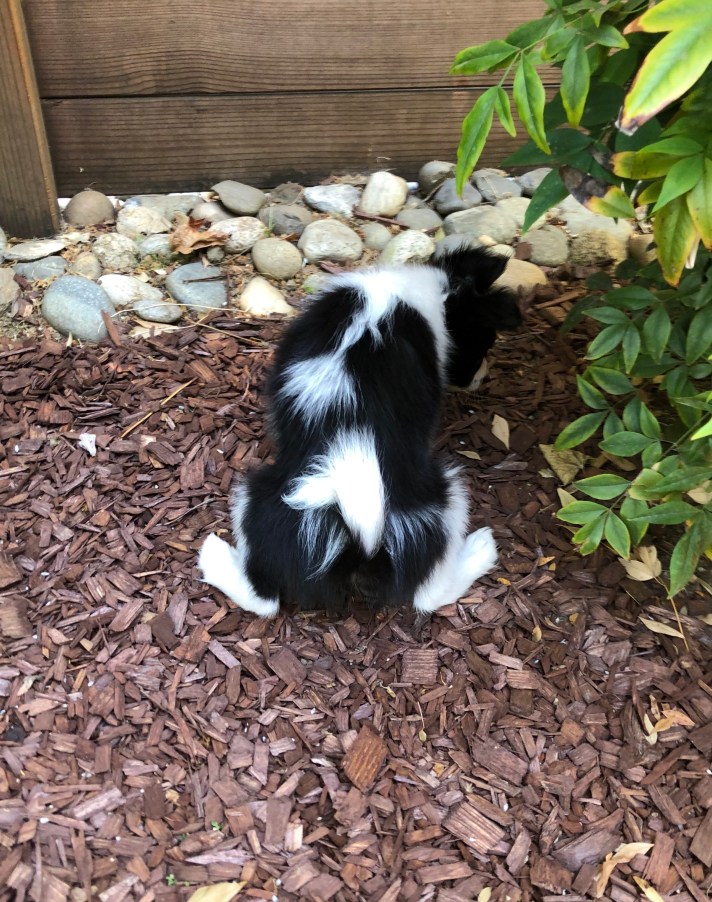
✔️ Take your dog to potty on different surfaces — grass, gravel, mulch, dirt, even concrete.
You want your dog to understand that the cue (“Go potty”) means it’s time to relieve themselves — not that they can only go on grass.
This will save you a lot of headaches later when you’re traveling or in areas without ideal potty spots!
✔️ Practice pottying both on leash and off leash whenever it’s safe to do so.
Some dogs have trouble connecting the dots because going potty on leash feels very different from being loose.
Getting them comfortable in both situations now will save you from future struggles.
✔️ Don’t rush them. Puppies sense our urgency. If you’re impatient, they might actually delay going because they feel pressured.
✔️ Remember: Your puppy isn’t trying to upset you. They might not fully understand yet, or they simply couldn’t hold it. Our job is to make it as clear and positive as possible.
Key Times to Take Your Puppy to Their Potty Spot
Timing is everything! Take your puppy to their potty area:
- After waking up from a nap
- After playing
- After eating
- After a training session
(And anytime you notice them sniffing around or circling.)
If they potty outside and then come inside and go again, it often means you didn’t wait long enough or they weren’t fully finished.
When that happens, take them back out, and if they potty again — jackpot them!
Give 10 tiny treats one by one with lots of praise to really let them know, THAT was the right choice!
Patience Builds Trust
Potty training is more than just teaching a skill — it’s a chance to strengthen your bond with your puppy. Being patient, positive, and consistent will help your puppy trust you more deeply, and that trust will make all future training much easier.
Need a Little Extra Help?
If you’re looking for an easy, fun way to start your training journey, my online course “1st Things 1st” would be a wonderful place to begin!
It’s filled with simple, positive games and lessons to help you and your puppy build a great relationship right from the start.
➡️ Click here to check out “1st Things 1st”
You’ve got this! 🌟 Remember — the puppy stage is short. Be patient, have fun, and celebrate every little success along the way!
 Dog Training